




Microsemi / Microchip PolarFire™ FPGA
Microsemi/Microchip PolarFire™現場可編程門陣列(FPGA)較同等SRAM FPGA的功耗低50%。FPGA以12.7Gbps串行器/解串器(SerDes)收發器提供中程密度的低功率,確保安全性和可靠性。FPGA產品系列理想適用於有線接入網和蜂窩基礎設施、防禦和商用航空市場及包含工業自動化和物聯網(IoT)市場在內的工業4.0領域的廣泛應用。
PolarFire FPGAs provide cost-effective bandwidth processing capabilities for the increasing number of converged 10Gbps ports with a low power footprint. The FPGA product family addresses concerns over cyber security threats and reliability issues that face deep sub-micron SRAM-based FPGAs as they relate to single event upsets (SEUs) in their configuration memory.
特點
- Cost-optimized Architecture
- Architecture and process optimizations for 100K/500K LE devices
- Transceiver performance optimized for 12.7Gbps, which yields smaller size
- 1.6Gbps I/Os—hardened I/O gearing logic with CDR (supports SGMII/GbE links on these GPIOs)
- Best-in-class high-performance, hardened security IP in mid-range devices
- Power Optimization
- The lowest static power:
- 1/10 static power vs. competing devices
- Transceiver optimized for 12.7Gbps, which yields 1/2 the power vs. competing devices
- Low power Flash Freeze mode yields best-in-class standby power
- Integrated hard IP: DDR PHY, PCIe endpoint/root port, crypto processor
- Total power: up to 50% lower
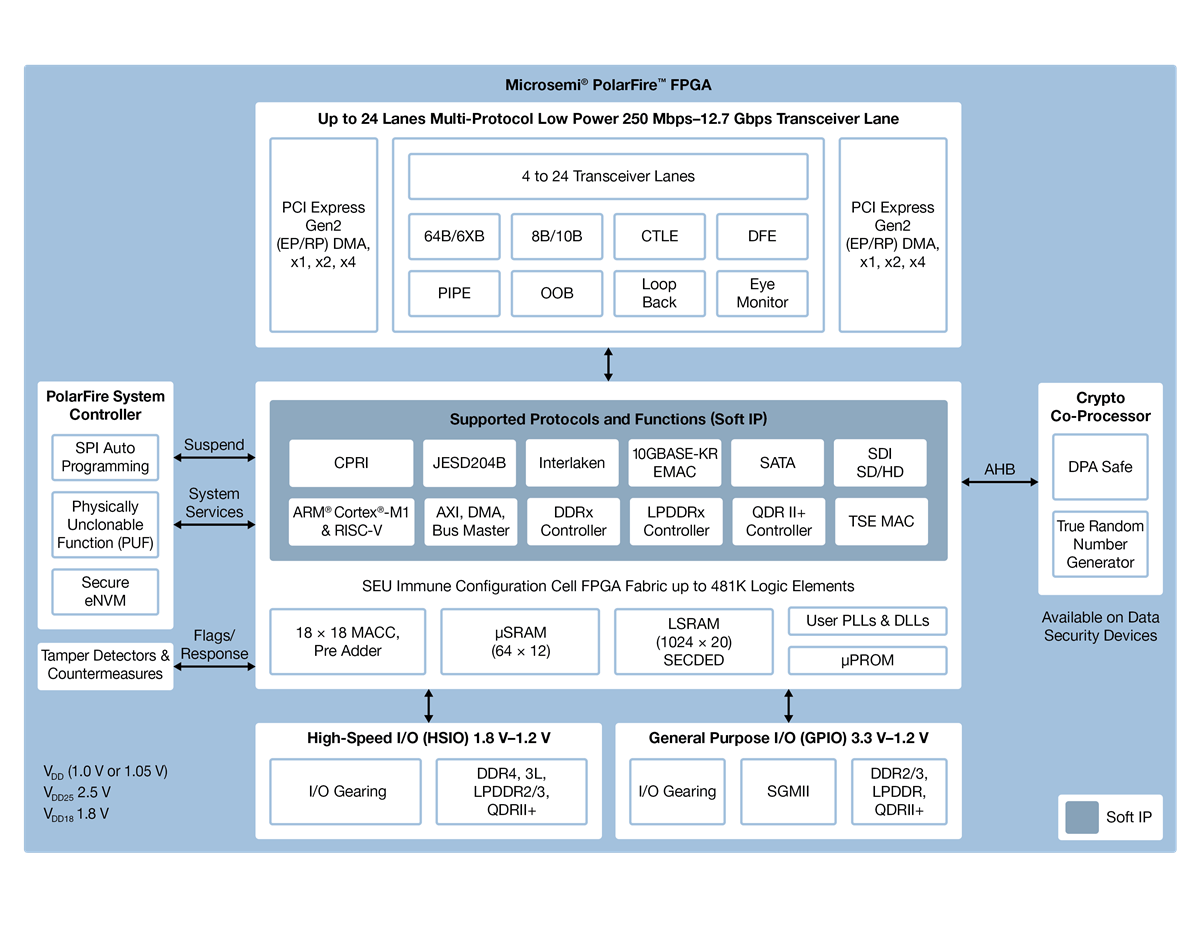

PolarFire FPGAs offer various device offerings like design security with transceivers, low power transceiver devices, data security with transceivers, and low power data security with transceiver devices. All PolarFire FPGAs are integrated with multi-protocol industry-leading low-power transceivers. Low power (L) devices provide up to 35% lower static power. Also, data security (S) devices have an integrated DPA safe crypto accelerator. PolarFire Devices are currently offered in Extended Commercial (0ºC to 100ºC) and Industrial (-40ºC to 100ºC) device offerings.
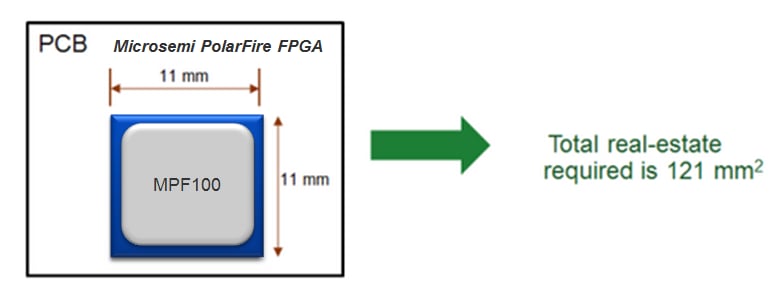
Microsemi / Microchip PolarFire FPGAs are available in the smallest form factors for mid-range density devices. For example, the MPF100 device is available in a 11x11mm package. In addition, PolarFire devices do not require external configuration memories that are typically required for SRAM based FPGAs.