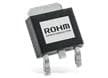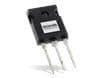

SCS220AE2HRC11

ROHM Semiconductor
755-SCS220AE2HRC11
SCS220AE2HRC11

製造商:

說明:
碳化矽肖特基二極管 AECQ

ECAD模型:
下載免費的庫載入器,為ECAD工具轉換此文件。瞭解更多關於 ECAD 型號的資訊。

庫存量: 1,924

庫存:
1,924 可立即送貨
工廠前置作業時間:
21 週 工廠預計生產時間數量大於所顯示的數量。
最少: 1   多個: 1
單價:
HK$-.--
總價:
HK$-.--
估計關稅:

Pricing (HKD)

數量 單價
總價
HK$82.12 HK$82.12
HK$48.33 HK$483.30
HK$43.07 HK$4,307.00
HK$41.35 HK$18,607.50
2,700 報價

商品屬性 屬性值 選擇屬性
ROHM Semiconductor
產品類型: 碳化矽肖特基二極管
RoHS:  
Through Hole
TO-247N-3
Dual
20 A
650 V
1.55 V
76 A
200 uA
+ 175 C
AEC-Q101
Tube
品牌: ROHM Semiconductor
Pd - 功率消耗 : 160 W
產品類型: SiC Schottky Diodes
原廠包裝數量: 450
子類別: Diodes & Rectifiers
Vr - 反向電壓: 650 V
零件號別名: SCS220AE2HR
找到產品:
若要顯示類似商品,請選取至少一個核選方塊
至少選中以上一個核取方塊以顯示在此類別中類似的產品。
所選屬性: 0

此功能需要啟用JavaScript。

CNHTS:
8541100000
CAHTS:
8541100090
USHTS:
8541100080
JPHTS:
854110090
KRHTS:
8541109000
TARIC:
8541100000
MXHTS:
8541100199
BRHTS:
85411099
ECCN:
EAR99

AEC-Q101 SiC Schottky Barrier Diodes

ROHM Semiconductor AEC-Q101 SiC Schottky Barrier Diodes deliver breakdown voltages from 600V, far exceeding the upper limit for silicon SBDs. The AEC-Q101 Diodes utilize SiC, making them ideal for PFC circuits and inverters. Additionally, high-speed switching is enabled with ultra-small reverse recovery time. This minimizes both reverse recovery charge and switching loss, contributing to end-product miniaturization. ROHM AEC-Q101 SiC Schottky Barrier Diodes offer a reverse voltage range of 650V to 1200V, a continuous forward current range of 1.2µA to 260µA, and a total power dissipation range between 48W to 280W. The devices are available in TO-247 and TO-263 packages, with a max temperature of +175°C.

Silicon Carbide (SiC) Power Devices

ROHM Semiconductor SiC Power Devices deliver 10x the dielectric breakdown field strength, 3x the bandgap, and 3x the thermal conductivity of conventional silicon solutions. This translates to lower switching loss, lower ON resistance, and support for high-temperature operation, making it possible to minimize power loss along with module size. ROHM SiC Power Devices also allow designers to use fewer components, further reducing design complexity.