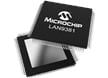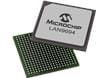

LAN9668/9MX

Microchip Technology
579-LAN9668/9MX
LAN9668/9MX

製造商:

說明:
乙太網路 IC 8 port TSN Switch with Cortex A7 CPU

ECAD模型:
下載免費的庫載入器,為ECAD工具轉換此文件。瞭解更多關於 ECAD 型號的資訊。

庫存量: 69

庫存:
69 可立即送貨
工廠前置作業時間:
4 週 工廠預計生產時間數量大於所顯示的數量。
最少: 1   多個: 1
單價:
HK$-.--
總價:
HK$-.--
估計關稅:

Pricing (HKD)

數量 單價
總價
HK$218.98 HK$218.98
HK$169.33 HK$4,233.25

商品屬性 屬性值 選擇屬性
Microchip
產品類型: 乙太網路 IC
RoHS:  
SMD/SMT
HSBGA-256
Ethernet Switches
10/100/1GBASE-T
2 Transceiver
10 Mb/s, 100 Mb/s, 1 Gb/s, 2.5 Gb/s
RGMII, RMII, SGMII, QSGMII
1.05 V
1.15 V
0 C
+ 70 C
Tray
品牌: Microchip Technology
濕度敏感: Yes
產品類型: Ethernet ICs
原廠包裝數量: 119
子類別: Communication & Networking ICs
找到產品:
若要顯示類似商品,請選取至少一個核選方塊
至少選中以上一個核取方塊以顯示在此類別中類似的產品。
所選屬性: 0

此功能需要啟用JavaScript。

CNHTS:
8542399000
CAHTS:
8542390000
USHTS:
8542390090
MXHTS:
8542399999
ECCN:
EAR99

LAN9668 8-port Ethernet Switches

Microchip Technology LAN9668 8-port Ethernet Switches are compact and cost-effective, with multi-port Gigabit Switches. These switches are integrated with 10/100/1000BASE-T PHYs and 600MHz ARM Cortex A7 CPU subsystem. The LAN9668 ethernet switches are Time-Sensitive Networking (TSN) switches that deliver IEEE standards-compliant features to lower latency data traffic flows and greater clock accuracy. These Ethernet switches include 8 ports and support up to two RGMII/RMII, and three 1000BASE X/SerDes/2.5GBASE-X/KX. In addition to the two integrated PHYs, they also support up to two Quad-SGMII/Quad-USGMII interfaces. Warehouses and industrial ecosystems rely on TSN and Ethernet for precise timing, synchronization, and connectivity of devices including cameras, barcode readers, scanners, and conveyors.

EQCO125X40 12.5Gbps CoaXPress 2.0 Devices

Microchip Technology EQCO125X40 family of CoaXPress devices is the first to implement the CoaXPress 2.0 (CXP 2.0) standard, starting from a backward-compatible design based on the specification, with an integrated clock data recovery (CDR) at all speed levels and a camera-side clock to support the demands of real-world environments. The devices significantly increase machine-vision processing throughput by enabling cameras and capture cards to transmit four to eight times faster than alternative solutions. In addition, these devices enable four times the cable/link distance with much lower power and near-zero latency.